About
The approach of Aquilla Archaeology Ltd. is to deliver detail oriented and technically rigorous studies grounded within a culturally ethical framework. Our strategy is to provide the most information possible which in turn results in optimal outcomes for all parties including the client and the community where the project is situated.
Our team consists of professionals who love heritage. Our passion about what we do infiltrates all aspects of our work. We are always seeking new and creative methods to enhance our results and are always keen to share how our work can reveal stories deeply embedded in the past.
 Colleen Parsley, M.A. has many years experience as an expert in Northwest Coast archaeology and particularly in Coast Salish archaeology. Over the years, she developed extensive bioarchaeology and mortuary expertise in coastal archaeology settings in BC. Intersections between ethics, archaeology, colonialism and interactions with the dead are research themes commonly explored in Colleen's work. Colleen also uses 3D laser and other technologies as tools to enhance documentation of Northwest Coast indigenous heritage.
Colleen has directed multi-year archaeological excavation projects and has gone on to manage projects for municipal, provincial, First Nation communities and private sectors. Colleen's project management portfolio include large scale projects such as large scale infrastructure for municipalities, pipelines, and mining projects but also smaller projects such as residential development, dock installations, and not-for-profit heritage work. In 2020 Colleen completed the Stz'uminus Origins Project which is the largest study of ancestral human remains undertaken from in British Columbia. Under Colleen’s direction, Aquilla Archaeology has grown extensively since 2008.
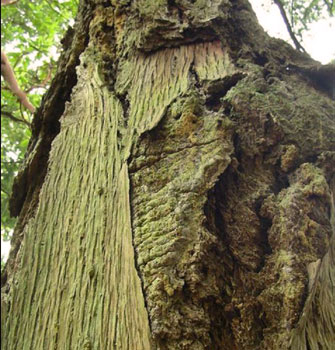
Culturally modified Douglas-fir tree from Stz'uminus First Nation Territory recorded in 2008. Douglas-fir bark was taken off in strips and collected for a variety of purposes but most importantly used as fire wood and for coverings on temporary shelters. See an example of how Douglas-fir bark was used or learn more about Douglas-fir CMTs.

